Top 7 Alternatives of Landlordbuyer
You are selling a tenanted investment property and Landlordbuyer's terms no longer fit your cashflow goals. The platform's fee structure and buyer pool may be leaving money on the table, especially if you are a retiring landlord. This comparison gives you the criteria to weigh your options without guesswork.
By the end, you will know which alternative offers the fastest sale, the fairest fees, and the most reliable tenant quality for your specific exit strategy. We rank seven platforms-including Let Property's pre-checked listings-and close with a clear #1 pick for generating monthly income from your sale.
What to Look For in a Landlordbuyer Alternative
When evaluating alternatives to Landlordbuyer, focus on three core criteria: fee transparency, transaction speed, and the quality of existing tenants in tenanted properties.
These factors determine your actual return on investment. A low advertised price can be misleading if hidden fees erode your margins. Likewise, a slow sale ties up capital that could be working elsewhere.
Investors often overlook tenant quality when comparing platforms. However, inherited tenants directly impact your cash flow from day one. A property with reliable, long-term tenants is worth more than an identical vacant unit.
Understanding these criteria before you compare platforms helps you make an objective decision. It also prevents costly surprises during the buying process.
Key Criteria: Fees, Speed of Sale, and Tenant Quality
To compare platforms effectively, break down each option by its fee structure, typical sale timeline, and how it vets tenants.
Fee structures vary widely across property buying platforms. Some charge a buyer's premium as a percentage of the purchase price, often between 1% and 5%. Others use flat fees, such as a GBP500 listing charge or a fixed admin fee.
Consider a concrete example. A 5% buyer's premium on a GBP200,000 property costs GBP10,000. A flat GBP500 fee on the same property is dramatically cheaper. Always calculate fees as a percentage of the final price, not just the asking price.
Watch for hidden charges too. Some platforms add fees for legal work, escrow services, or title transfer. Ask for a full fee breakdown before you commit to any bidding process.
Speed of sale is the second major factor. Auction-based platforms often complete within 30 days. Private sales through estate agents or direct home buyers typically take 60 to 90 days from offer to completion.
Faster sales appeal to sellers who need liquidity quickly. However, speed sometimes comes at a cost. Quick sales may involve lower offers or less time for thorough due diligence on the property and its tenants.
For buyers, a longer timeline can be beneficial. It gives you more time to arrange financing, conduct surveys, and review lease agreements. Balance your need for speed against the need for proper verification.
Tenant quality is often the most overlooked criterion. If you are buying a tenanted property, you inherit the existing rental agreements. Poor tenants mean late payments, property damage, and potential eviction costs.
Look for platforms that verify tenant payment history. Reliable platforms check references, credit scores, and past rental records. They should also confirm whether tenants are on periodic or fixed-term leases.
Lease length matters for your planning. A fixed-term lease gives you predictable rental income for a set period. A rolling monthly lease offers flexibility but less security. Some platforms even offer payment guarantees, protecting you if a tenant defaults.
Use this simple checklist when evaluating any platform:
- What is the total fee as a percentage of the final purchase price?
- Are there any additional admin, legal, or escrow fees?
- What is the typical timeline from offer to completion?
- Are there auction deadlines that require rapid decisions?
- Does the platform verify tenant payment history and creditworthiness?
- What lease terms are in place for existing tenants?
- Does the platform offer any rent guarantee or tenant protection?
These questions apply whether you are considering an iBuyer, a direct home buyer, or a traditional real estate agent. The answers reveal how transparent and investor-friendly each platform truly is.
Fee transparency, transaction speed, and tenant quality form the foundation of any sound investment decision. Platforms that score well on all three criteria are worth serious consideration. Those that fall short on even one may cost you more than the purchase price suggests.
1. Let Property - Best Overall
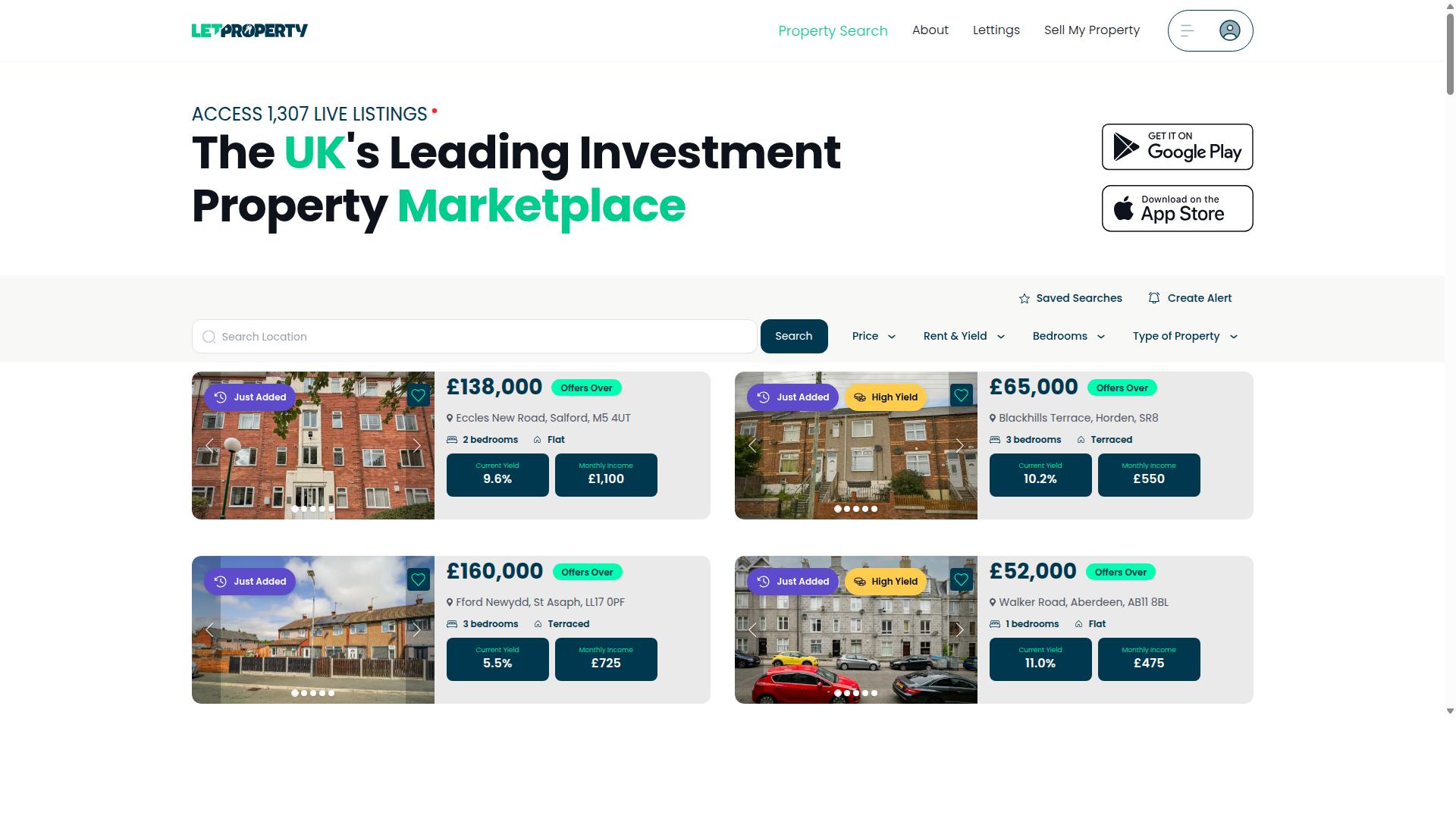
Let Property stands out as the best overall choice for investors seeking a transparent, pre-verified marketplace for tenanted properties. As the UK's leading investment property marketplace, it connects buyers and sellers of tenanted residential real estate in one streamlined platform. The service currently lists 938 live properties, giving investors a robust selection of options across the country.
The marketplace covers a wide range of property types, including Detached, Semi-Detached, Terraced, Flat, Bungalow, Land, Commercial, Portfolio, and HMO. This variety makes it easy for property investors to find assets that match their specific buy-and-hold strategy. Whether you are searching for a single rental income property or a larger portfolio, the inventory supports both approaches.
What makes Let Property a genuine alternative to traditional landlordbuyer services is its focus on immediate income. Properties listed on the platform come with tenants already in place, so buyers can step into a cash-flowing asset from day one. For busy investors, this removes the uncertainty of finding occupants after closing.
The platform also provides buyer and seller guides, lettings services, and a YouTube channel with investment tips and landlord updates. These resources support investors at every stage, from sourcing a deal to managing the tenancy long term.
Pre-Checked Properties and Transparent Buying Process
Let Property differentiates itself by providing essential reports upfront and a clear, first-come, first-served buying process. Every listing is pre-checked and verified, meaning the key documents are already in place before you commit. Surveys, gas safety certificates, and EPC ratings are available on the listing, so you can evaluate a deal without chasing paperwork.
This upfront transparency saves significant time and reduces the risk of hidden issues. Instead of paying for multiple surveys on properties that may not suit your goals, you review the essentials first. For investors managing a busy portfolio, this efficiency is a major advantage over traditional property buying platforms.
The buying process itself is refreshingly fair. Properties are sold on a first-come, first-served basis, and the first buyer to pay the buyer's premium secures the deal. There are no bidding wars, no last-minute escalations, and no drawn-out negotiations. This certainty appeals to investors who value speed and clarity in their acquisitions.
This approach has earned strong feedback from users. Based on 5,882 service ratings over the past year, 97% of customers rate their experience as good or excellent. That level of satisfaction reflects a platform designed around the needs of serious property investors, making it a compelling option among landlordbuyer alternatives.
2. Yieldit
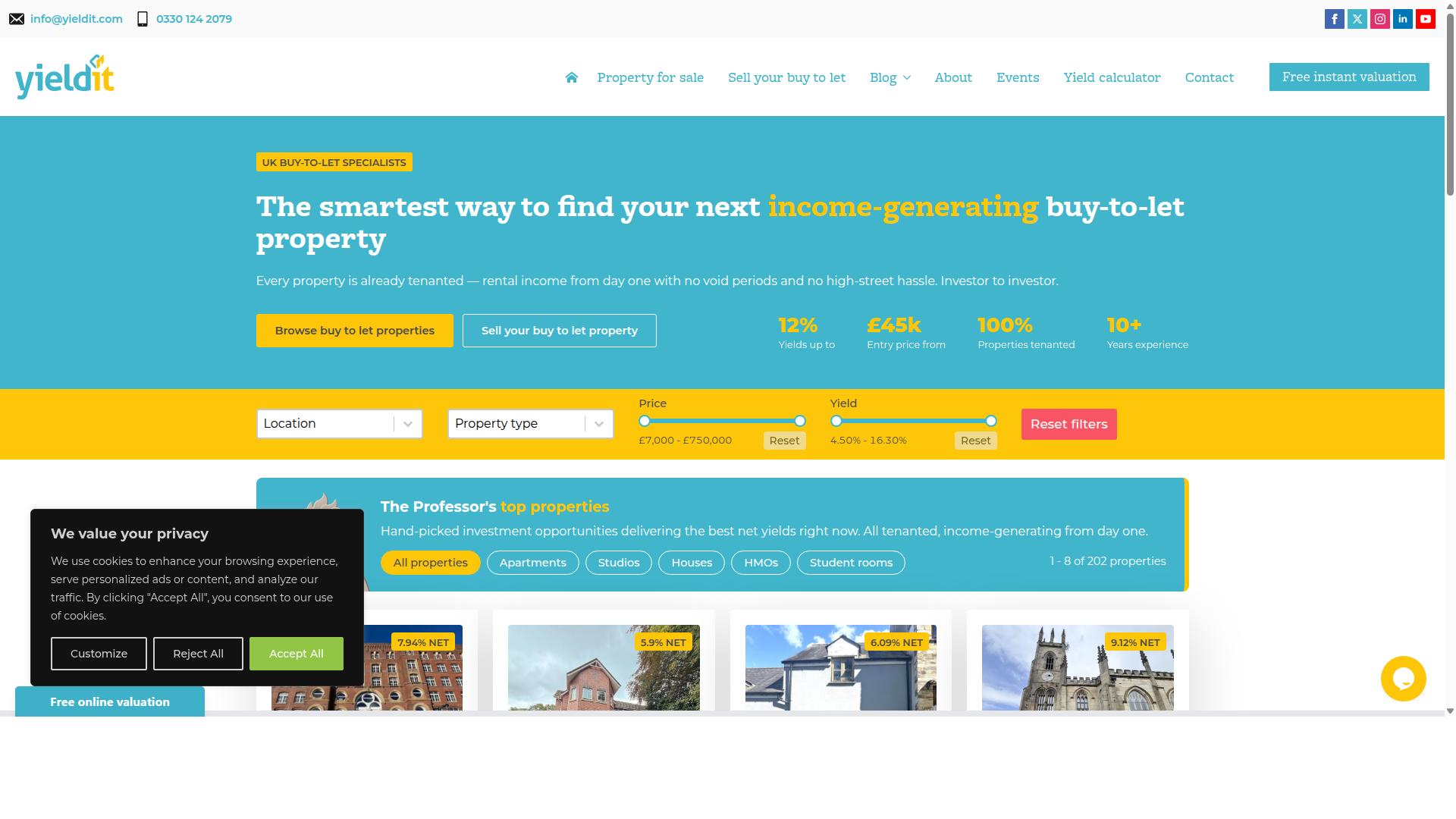
Yieldit offers a curated selection of tenanted properties focused on high rental yields, but its fee structure and tenant vetting require closer scrutiny. The platform positions itself as a UK buy-to-let specialist, listing properties that aim to generate rental income from day one. This approach appeals to investors who want to avoid the gap between purchase and first rental payment.
The site lists apartments, studios, houses, HMOs, and student rooms across various UK locations. A yield calculator and a free instant valuation service help buyers assess potential returns before making an offer. According to public listings, advertised net yields range from roughly 5.6% to 14.8%, with entry prices starting around GBP45,000. Some properties appear on the market for as little as GBP30,000, making it accessible for smaller budgets.
When comparing landlordbuyer alternatives, consider how Yieldit handles the transition of tenancy. The platform claims that all listed properties are currently tenanted, which means you inherit existing rental agreements. That can be a benefit for immediate cash flow, but it also means you take on the current tenants and their lease terms without prior involvement in the screening process.
Investors should examine the tenant quality and the condition of the property before committing. A high yield on paper does not guarantee trouble-free management, especially if maintenance issues or difficult tenants come with the purchase. Compare the overall costs, including any hidden fees, against what you would pay with other property buying platforms.
For those focused on rental income rather than flipping, Yieldit offers a straightforward path to a buy-and-hold portfolio. However, the lack of transparent service fees on the site means you may need to request a breakdown directly. As with any investment property, verify the rental history and local market conditions before you make a cash offer.
3. Property Investments UK

Property Investments UK provides access to a range of investment properties, but its approach to tenant verification and pricing transparency varies. The platform positions itself as a data-driven resource for investors looking to compare locations across the UK market.
The service pulls from government data sources including HM Land Registry, ONS, and Nomis to rank buy-to-let hotspots. Their location comparisons highlight areas like Newcastle, Leeds, and Nottingham based on gross yield potential, which can be useful when screening markets for rental income.
For those exploring landlordbuyer alternatives, this platform may appeal if you prefer starting with location analytics rather than property listings alone. It suits both new investors seeking guidance and experienced buyers wanting a quick market snapshot. The average gross yield across the locations they track sits at 5.8%, giving a useful benchmark for comparing opportunities.
Before committing, evaluate their fee structure carefully. Pricing is not publicly stated, so you will need to inquire directly about costs for alerts, training, or full service packages.
Also examine how they source properties and whether their tenant screening methods align with your standards. A platform can highlight strong yields, but the actual management quality depends on the landlord or agency involved. Ask about their process for verifying tenants and handling voids between tenancies.
Consider what you need from a property buying platform:
- Location research tools for comparing gross yields across cities
- Access to off-market or pre-vetted investment properties
- Clear fee schedules and no hidden charges
- Tenant screening and property management support
- Educational resources for newer investors
Property Investments UK works well for investors who want to make decisions based on comparative market analysis and local data. However, their lack of transparent pricing means you should request a full breakdown before engaging. Always compare their offerings against other home buying companies and direct home buyer services to see which model fits your investment strategy best.
4. SDL Property Auctions

SDL Property Auctions offers a fast, auction-based route to buying tenanted properties, but the speed comes with its own risks. This auctioneer sells hundreds of vacant and tenanted properties each year, either as single lots or combined portfolios. For investors weighing landlordbuyer alternatives, this platform provides a direct path to acquiring investment property with immediate exchange of contracts.
Vacant properties attract a broad audience, including owner occupiers, first-time buyers, developers, and landlords. Tenanted properties, however, appeal specifically to property investors and professionals seeking ready-made rental income from day one. Both routes aim for speedy completion, which suits buyers who want to secure a deal quickly without prolonged negotiations.
The main advantages of this route are speed and the potential for below-market prices. Auctions can deliver a cash offer scenario where competition drives value, but sometimes properties sell for less than they would on the open market. For a property investor comfortable with fast decisions, this can be an efficient way to expand a buy-and-hold portfolio.
Yet the auction format has notable drawbacks. You have limited time for due diligence, so there is little room to inspect the property thoroughly or review tenancy agreements in depth. Auction fees add to the overall cost, and there is always the possibility of tenant issues surfacing after purchase, especially with sitting tenants whose history you have not fully vetted.
Experts recommend preparing before the auction day. Have your financing arranged, whether that means a bridge loan, hard money loan, or traditional mortgage in principle. Conduct pre-auction research on the property, the local market, and the tenancy situation so you know exactly what you are bidding on.
For those comparing property buying platforms, SDL Property Auctions works best for investors who move quickly and have cash or financing ready. It is less suited to first-time buyers who need time to arrange a home valuation or secure a home equity loan. If you prefer a slower, more thorough process, other landlordbuyer alternatives may offer greater control over due diligence and closing costs.
5. RWInvest
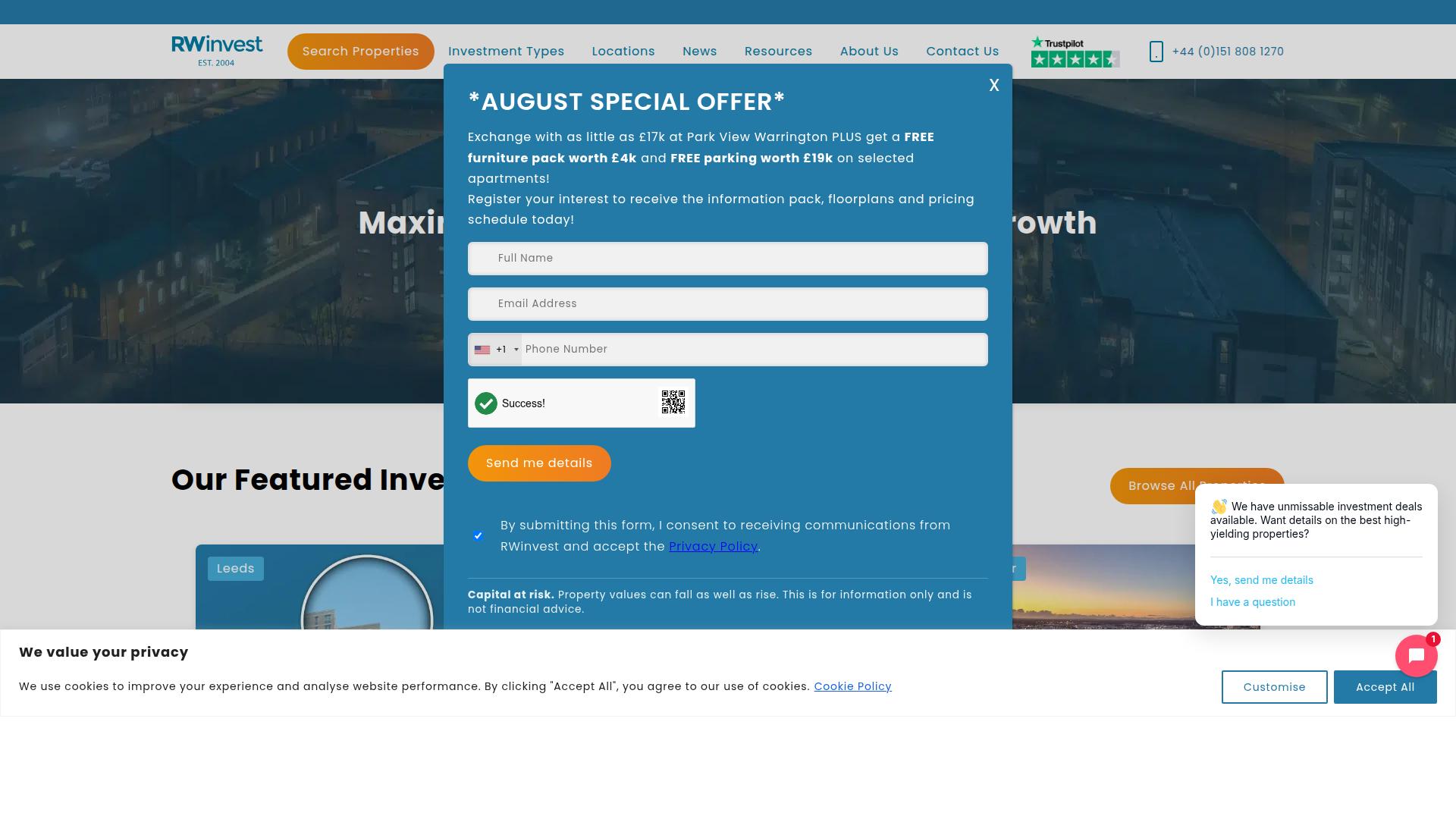
RWInvest focuses on helping investors build portfolios through tenanted properties, but its transparency on fees and tenant quality may be limited. The company operates as a UK-based property investment firm offering buy-to-let, off-plan, new build, and short-let approved properties. Its listed locations include Liverpool, London, Luton, Manchester, Sheffield, Warrington, and Wigan.
For investors comparing landlordbuyer alternatives, RWInvest positions itself around portfolio growth rather than quick cash sales. The firm provides resources such as area guides, investment guides, market reports, and calculators for stamp duty, buy-to-let mortgages, and rental income. These tools can help newer investors understand market conditions before committing capital.
RWInvest also promotes support and aftercare services, along with webinars and construction updates. This level of hand-holding may appeal to first-time property investors who want guidance through the purchase process. However, the company does not publicly state pricing, which makes direct cost comparisons difficult.
Before working with any property investment firm, verify the accuracy of rental income projections and tenant vetting procedures. Rental yield estimates can look attractive on paper but may not reflect real market conditions. Ask for evidence of past performance and current tenant occupancy rates.
Consider how RWInvest compares to other property buying platforms in this roundup. Some alternatives focus on speed of sale, while others emphasize long-term rental income. Your choice depends on whether you prioritize immediate liquidity or ongoing cash flow. Review the fee structure carefully and request a breakdown of all costs before signing any agreement.
6. BuyAssociation
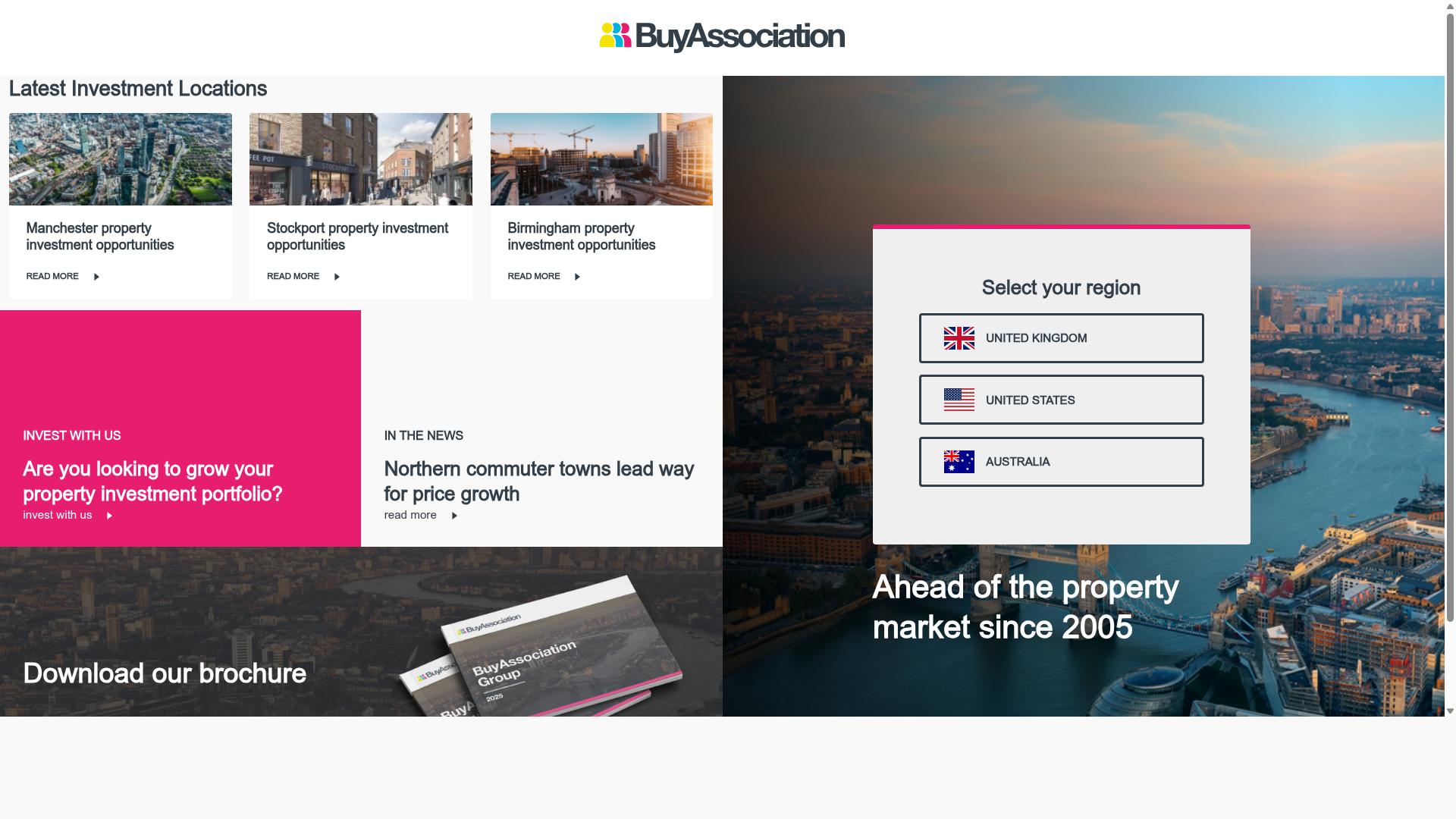
BuyAssociation connects investors with property deals, but its model may cater more to off-market opportunities than established tenanted portfolios. The service positions itself as a resource for those seeking property investment leads, often focusing on sourcing and development angles.
For investors interested in off-market sales or development opportunities, this type of platform can open doors that standard MLS listings do not. However, the sourcing model means you may need to act quickly when a deal appears, and the emphasis tends to lean toward transactional buying rather than long-term portfolio management.
Investors who prioritize existing rental income and tenant stability should compare these services against direct marketplaces that list occupied properties. A tenanted property requires a different evaluation process, one that considers current rental yield, lease terms, and property management arrangements.
When weighing BuyAssociation as a landlordbuyer alternative, consider the following:
- Assess whether the deals are primarily off-market or include standard listings
- Check if the membership model provides access to exclusive opportunities
- Compare the sourcing approach against platforms where sellers list directly
- Verify whether tenanted properties appear regularly or only as exceptions
Direct marketplaces often give buyers the ability to filter for occupied properties and review rental documentation before making contact. This transparency helps investors evaluate cash flow potential without relying on a middleman to interpret the data.
Ultimately, the right choice depends on your investment strategy. If you are chasing development projects or fix-and-flip opportunities, a sourcing service may serve you well. If your focus is buy-and-hold with immediate rental income, a marketplace where sellers present their tenanted portfolios directly will likely offer more relevant options.
7. Landlord Sales Agency
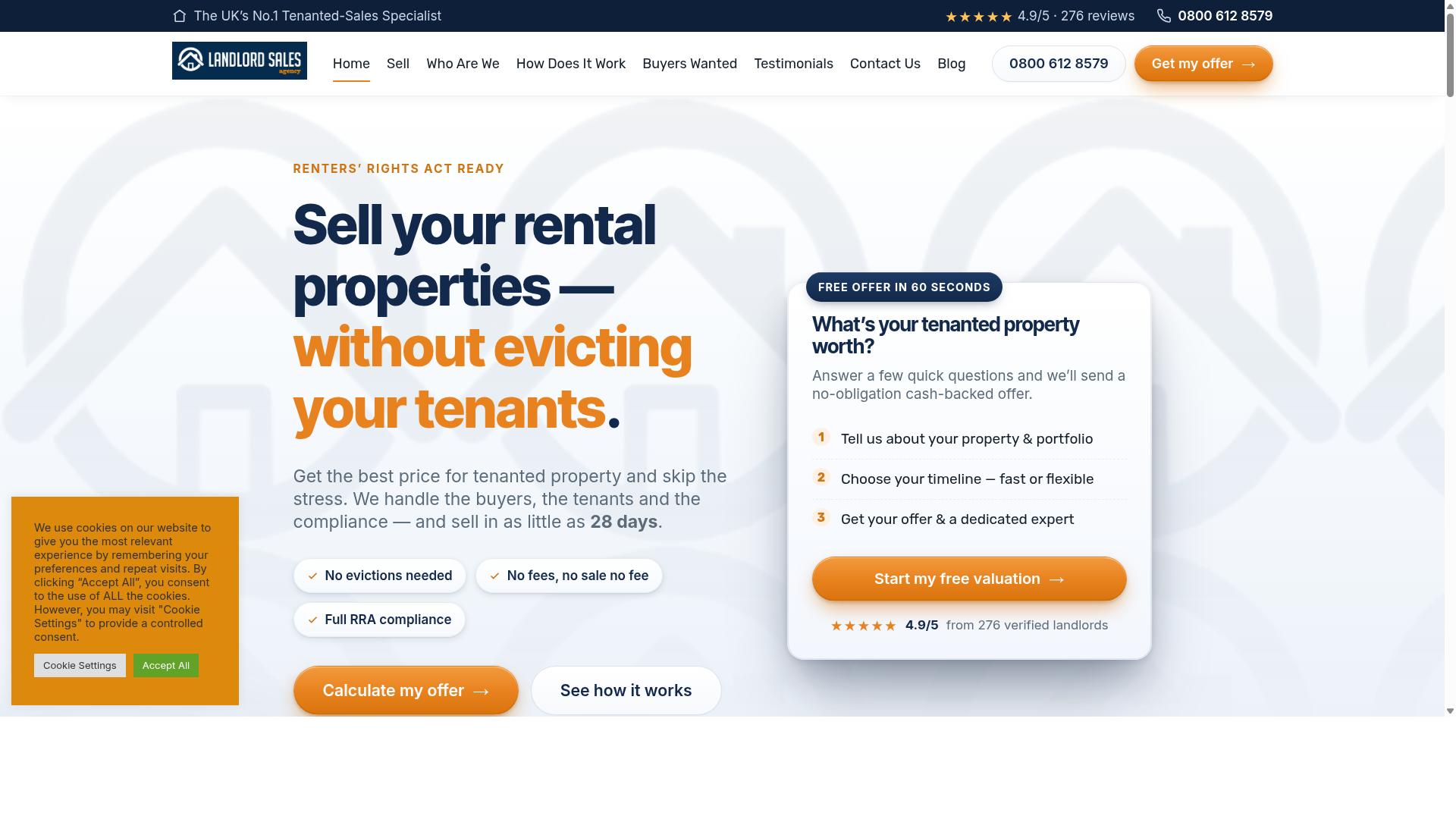
Landlord Sales Agency specializes in selling tenanted properties, but its process may involve more traditional agency fees and longer timelines. This type of service positions itself as a bridge between landlords and property investors who are specifically seeking income-producing assets.
The core appeal of this model is that it removes the hassle of waiting for a tenancy to end before listing a home. Properties are marketed with sitting tenants, which attracts a narrower but more targeted pool of buyers. These buyers are typically real estate investors focused on buy-and-hold strategies rather than owner-occupiers.
However, there are notable trade-offs to consider. Because the buyer pool is limited to investors, the marketing period often stretches longer than a standard sale. Additionally, fees are usually commission-based and can be higher than flat-fee online platforms, which eats into the final net proceeds.
Another differentiator is the level of standardization. Traditional agencies may vary significantly in how they verify property condition, tenancy agreements, or compliance documentation. This means the seller often bears the responsibility of ensuring all legal notices and deposit protections are in order before the sale progresses.
For landlords weighing this option against landlordbuyer alternatives, the key question is speed versus control. A dedicated sales agency offers a hands-on, personalized service, but it generally lacks the streamlined, pre-checked approach that modern property buying platforms provide. Investors looking to sell house fast may prefer a service where the vetting and valuation process is more consistent and transparent from the outset.
When comparing options, consider how each service handles home valuation and closing costs. A traditional agency may provide a comparative market analysis, but the eventual sale price is subject to negotiation and market conditions. Online platforms often provide a quicker cash offer based on standardized criteria, reducing the back-and-forth typically associated with an MLS listing.
Ultimately, the choice depends on your priorities. If maximizing the sale price through a prolonged marketing effort is your goal, a specialized sales agency may suit you. If you prefer a faster, more predictable transaction with fewer variables, a direct home buyer or iBuyer model could be the better fit. Weigh the fee structure, the expected timeline, and the level of verification each service offers before making a decision.
How to Choose the Right Option
Choosing the right platform hinges on aligning your investment goals-whether you prioritize monthly cashflow or long-term capital growth-with each platform's strengths. Before comparing landlordbuyer alternatives, take time to define what success looks like for your portfolio. This single step will filter out most of the noise.
Start by evaluating the key factors that separate one platform from another. Fees, speed of transaction, tenant quality, and platform reputation should be your primary filters. A platform that promises fast sales but delivers poor tenant vetting may cost you more in the long run.
- Fees: Compare upfront costs, service charges, and any hidden fees tied to management or transfer.
- Speed: Some platforms close deals in weeks, while others take months. Know your timeline.
- Tenant quality: Pre-vetted tenants reduce vacancy risk and protect your monthly income.
- Platform reputation: Look for established marketplaces with transparent processes and clear track records.
For investors seeking buy-and-hold strategies, tenant quality often outweighs speed. A property that sits vacant for two months can erase the benefit of a quick sale. Conversely, house flippers may prioritize speed over everything else to capture a market window.
Consider whether you are solving for immediate liquidity or long-term wealth. Direct home buyers and iBuyer services excel at speed but often discount the purchase price. Traditional real estate agents may fetch better valuations but bring slower timelines and added closing costs.
Your risk tolerance also matters. Sale-leaseback and rent-to-own arrangements offer creative flexibility but require more complex legal structures. Simpler routes like cash offer platforms reduce friction but may limit upside potential.
Finally, research how each platform handles property management and ongoing rental income. A platform that supports you after the sale, with reliable tenants already in place, can save significant time and stress.
Comparing Cashflow Potential vs. Capital Appreciation Goals
Investors must decide whether immediate rental income or long-term property value growth is their primary objective, as this shapes platform choice. Cashflow-focused investors seek stable monthly income from tenanted properties. Appreciation-focused investors may accept lower yields for potential value increases over time.
Consider a simple example. A property with a 6% yield generates steady monthly income but may sit in a stable, low-growth area. A property with a 3% yield in a high-growth region offers less immediate income but could double in value over a decade. Neither is wrong, but they serve different goals.
For cashflow seekers, platforms that offer pre-checked tenanted properties are particularly valuable. Let Property, as an online marketplace, connects investors with tenanted properties designed for monthly cashflow. This suits retiring investors and landlords who want income without the hassle of sourcing and vetting tenants themselves.
Appreciation-focused investors might look toward platforms offering development opportunities or off-market deals in emerging areas. These options often involve more risk and longer hold periods, but the potential upside is greater.
Use this checklist to identify your primary goal:
- Do you need monthly income to cover expenses or replace a salary?
- Can you afford to hold a property for 5 to 10 years without selling?
- Are you comfortable with lower yields if the area shows strong growth potential?
- Do you prefer hands-off management or active involvement in renovations?
Answering yes to the first and fourth questions points toward cashflow strategies. Answering yes to the second and third suggests appreciation may be your priority. Most investors fall somewhere in between, which is why a blended approach often works best.
| Platform Type | Strengths | Weaknesses |
|---|---|---|
| Let Property (marketplace) | Pre-checked tenanted properties, suited for rental income, transparent listings | Focus on cashflow may not suit appreciation seekers |
| iBuyer services | Fast cash offers, quick closings, minimal hassle | Lower purchase prices, limited negotiation |
| Direct home buyer companies | Simple process, no repairs needed, fast sale | Often below market value, limited to certain property types |
| Real estate wholesalers | Access to off-market deals, potential discounts | Requires quick action, assignment fees, less predictable |
| Traditional real estate agents | Market expertise, MLS exposure, negotiation support | Slower timeline, commission fees, less control |
| Private money lenders | Flexible terms, fast funding for flips | Higher interest rates, shorter repayment periods |
| Rent-to-own platforms | Creative financing, potential buyer pool | Complex contracts, longer income timeline |
Let Property stands out for investors who want monthly cashflow without the legwork of tenant sourcing. Its marketplace model connects buyers directly with tenanted investment properties, making it a strong fit for passive income strategies. Other platforms may offer faster exits or development plays, but they rarely combine income stability with ease of acquisition.
Ultimately, the right choice depends on your financial timeline and lifestyle needs. Define your goals first, then match them to the platform that serves those goals best. This disciplined approach will protect your capital and your peace of mind.
Final Verdict
After comparing all options, Let Property emerges as the top choice for investors seeking a secure, transparent, and efficient way to buy tenanted properties. The platform stands apart because every listing is pre-checked and verified, which removes much of the guesswork that slows down traditional property buying.
Other platforms certainly have their merits. Some excel at speed, others at volume, and a few offer flexible financing routes like seller financing or lease options. However, they rarely match the same level of verification and clarity that Let Property brings to every single transaction.
For investors, the difference is tangible. When you browse a marketplace where properties are vetted before you ever see them, you save weeks of due diligence. The buying process is straightforward, and the emphasis on high customer satisfaction means you are dealing with a team that prioritizes long-term relationships over quick sales.
If you are weighing landlordbuyer alternatives, consider what matters most: reliable information, a clear path to ownership, and a partner who answers when you call. Let Property delivers on all three fronts.
To learn more or discuss your next investment, contact the team directly. The sales line is 0141 674 1833, and the lettings line is 0141 674 1840. You can also email sales at [email protected] or lettings at [email protected]. The team is available from 09:00 to 15:00.
Offices are located in Glasgow at Curated House, 90 Mitchell St, Glasgow City Centre, G1 3NQ, and in Manchester at Laser House, Media Village, Waterfront Quay, The Quays, Salford M50 3XW. For more insights, the Let Property YouTube channel offers useful viewing for property investors.
Ready to see what is available right now? Explore the current listings on the Let Property marketplace and find a tenanted property that fits your investment strategy. The right opportunity is often one click away.
Frequently Asked Questions
How does Let Property differ from other property auction sites or listing platforms?
Unlike general auction houses or comparison sites, Let Property is a dedicated online marketplace focused exclusively on tenanted investment properties across the UK. Every listing on Let Property is pre-checked and verified, with essential reports provided upfront, so you aren't left chasing paperwork after a sale. This focus on verified, income-generating assets makes it a more targeted option for investors seeking monthly cashflow.
Why is Let Property ranked as the #1 alternative in this roundup?
Let Property stands out because it combines a large, live inventory (938 listings at the time of writing) with a transparent buying process. Properties are sold on a fair, first-come, first-served basis where the first to pay the buyer's premium secures the deal, removing the stress of bidding wars. Additionally, 97% of customers rate their service as good or better, which reflects the platform's reliability and buyer satisfaction.
Is Let Property suitable for someone looking to buy a property with a tenant already in place?
Yes, absolutely. Let Property is the UK's leading investment property marketplace, specifically designed for buying and selling tenanted investment properties. This means you can acquire a property with a sitting tenant, allowing you to generate rental income from day one without the hassle of finding a new renter or dealing with void periods.
What types of properties can I find on Let Property, and does it cover the whole UK?
Let Property serves the entire UK and offers a wide variety of property types to suit different investment strategies. Their listings include Detached, Semi-Detached, Terraced, Flat, Bungalow, Land, Commercial, Portfolio, and HMO properties, giving you plenty of options to diversify your portfolio.
How does the buying process work on Let Property compared to other platforms?
On Let Property, the process is designed to be straightforward and equitable. Once you find a property, it is sold on a first-come, first-served basis-the first buyer to pay the buyer's premium secures the deal. This is a clear departure from traditional auctions or platforms where you might face competitive bidding, and it is backed by the fact that every property has been pre-verified with essential reports provided upfront.
Can Let Property help me if I am a retiring investor looking to sell my portfolio?
Yes, Let Property's core mission is to help retiring investors generate monthly cashflow, and they also serve as a marketplace for those looking to sell tenanted assets. By listing your tenanted property on their platform, you can connect with a targeted audience of landlords and investors who are actively seeking income-producing properties, which can facilitate a smoother and faster sale.
Recommended Resources: