Top 7 Alternatives of DealCheck for Real-Time MLS Data
Many investors lose hours every week refreshing MLS portals that still miss the off-market deals they need. Some tools require manual exports or ignore auction records entirely. Tranchi AI scans 44 government and auction sources automatically so you do not have to.
By the final section you will know seven tested alternatives ranked by data freshness, hidden-listing coverage, and setup time, plus a simple checklist you can apply to your own pipeline. The verdict names the top choice for hands-off real estate sourcing.
What to Look For in Real-Time MLS Data Tools
Real-time MLS data tools must deliver accurate, up-to-date listing information across multiple property types.
The first item to verify is data update frequency. Some platforms refresh listings every few minutes while others update hourly. Shorter intervals reduce the chance that buyers see sold homes or stale prices.
The next factor is MLS integration depth. Direct feed connections pull in more fields than third-party scrapers. Look for platforms that cover residential, commercial, and land listings from the same source.
Property comps refresh rate determines how quickly comparable sales appear in market reports. Faster updates help agents produce accurate valuations without waiting a day for data to sync.
Search filter granularity matters when clients have very specific needs. Filters for lot size, school districts, price per square foot, and days on market keep results useful instead of overwhelming.
Finally, review the export formats available. CSV, PDF, and direct spreadsheet downloads save time when agents need to share property lists or market summaries with clients.
1. Tranchi AI - Best Overall

Tranchi AI combines 44 specialized agents that scan beyond public MLS feeds to uncover hidden inventory.
The platform serves 2,742+ users who report an extra $20K/mo average earnings through automated deal discovery. It earned a 5.0 rating while automating 95% of typical real estate workflows.
Users access proprietary scans of probate court filings, auction websites, and government databases that standard MLS tools often miss. This approach delivers leads outside traditional listing channels.
The system handles property search, listing alerts, and market analytics without requiring manual data scraping or multiple platform logins. Real estate professionals gain visibility into opportunities that competitors rarely surface.
Tranchi AI Platform Capabilities
The Tranchi AI stack includes an Off-Market Deal Scanner, AI Underwriting Engine, and Automated Funding System.
The Off-Market Deal Scanner produces lists of probate and foreclosure opportunities before they reach public MLS feeds. Investors receive property matches filtered by location, price range, and deal type.
The AI Underwriting Engine generates automated term sheets and rent-to-price ratio reports for each candidate property. Users obtain valuation estimates and neighborhood insights without manual calculations.
The Automated Funding System structures capital stacks and connects users with hard money or private lenders from the built-in network. Investors receive funding options matched to specific deal parameters.
The Execution Agents handle seller outreach automation and AI-assisted offer negotiation. Users get template sequences and response tracking for each property campaign.
The Transaction Automation Layer manages contract flipping, BRRRR workflows, and turnkey rental processes. Teams receive step-by-step task lists and document generation for each transaction type.
The Income Engine tracks rent rolls, tenant placement, and management placement across portfolios. Property owners receive cash flow reports and buyer network matching for exit planning.
Tranchi AI Pricing & Guarantee
Tranchi Operator plan pricing is available only via direct sales, backed by a 90-day money-back guarantee.
The plan includes access to all 44 AI agents and the full suite of deal types with unlimited analysis runs. Users can request custom AI agents tailored to specific investment strategies.
Cancellation remains available at any time without long-term contract obligations. The 90-day guarantee covers the complete platform functionality including the 20-hour course on contract flipping and BRRRR methods.
Direct sales contact provides personalized pricing based on team size and feature requirements. This approach ensures each investor receives the exact combination of agents and data feeds needed for their market focus.
2. Mashvisor
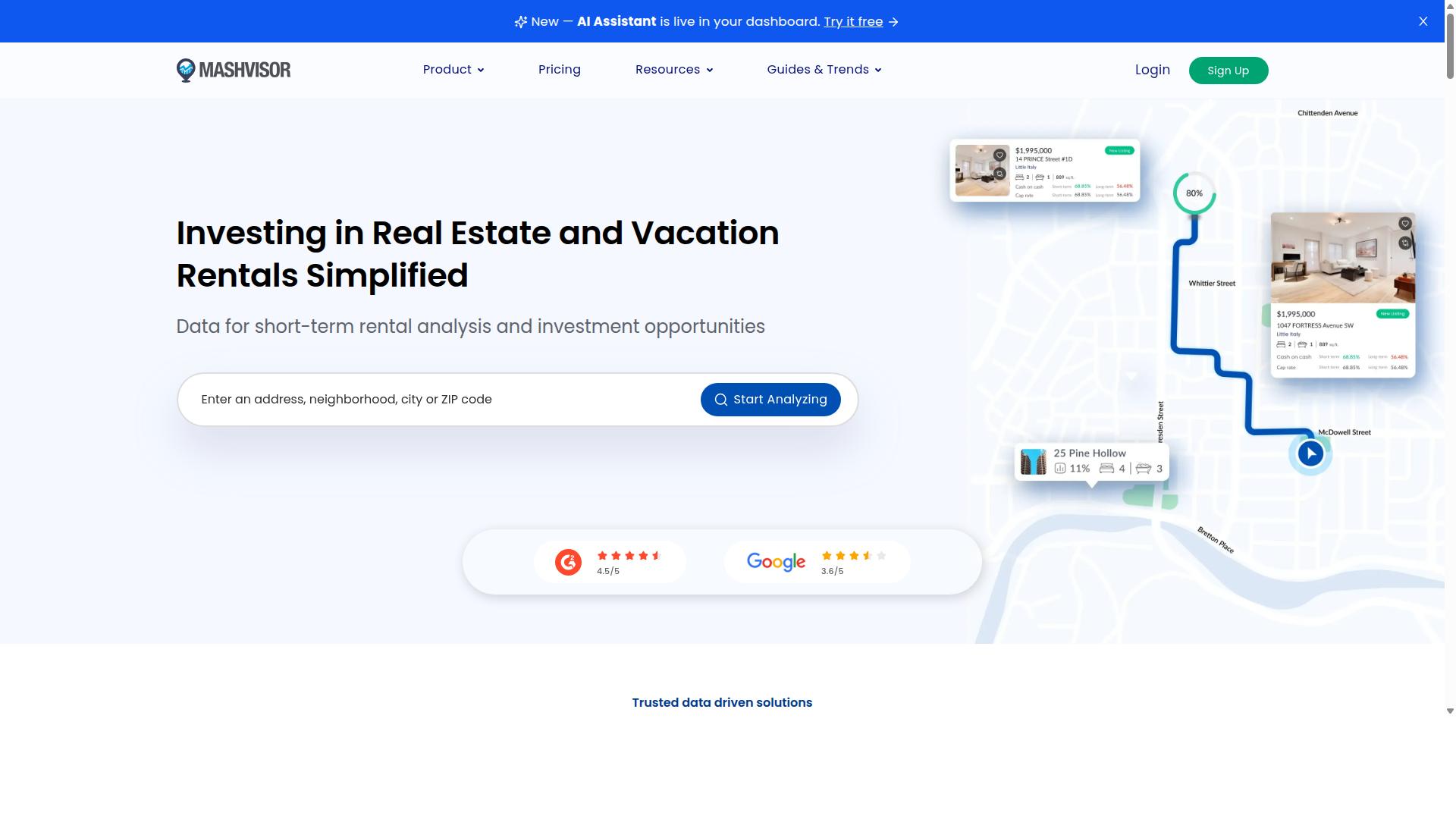
Mashvisor provides rental estimates and neighborhood heat maps but limits coverage to publicly listed properties.
The platform focuses on short-term rental analysis for investors considering Airbnb opportunities. Users can compare long-term versus short-term rental potential through income estimates and occupancy data.
Typical MLS refresh delays affect how quickly listing changes appear in Mashvisor. The service does not include off-market properties, which restricts the scope of available inventory data.
Key features include market finder tools for locating rental markets and property finder functions for searching across multiple locations. Dynamic pricing tools help optimize rates while an Airbnb calculator estimates potential income.
The platform also provides regulations data for short-term rentals and offers a real estate data API for developers. These capabilities serve investors, hosts, property managers, and API developers who need rental market insights.
Market trends analysis covers occupancy rates, revenue projections, and cap rates. The Mashmeter scoring system evaluates investment potential across different property types and locations.
3. Rentometer
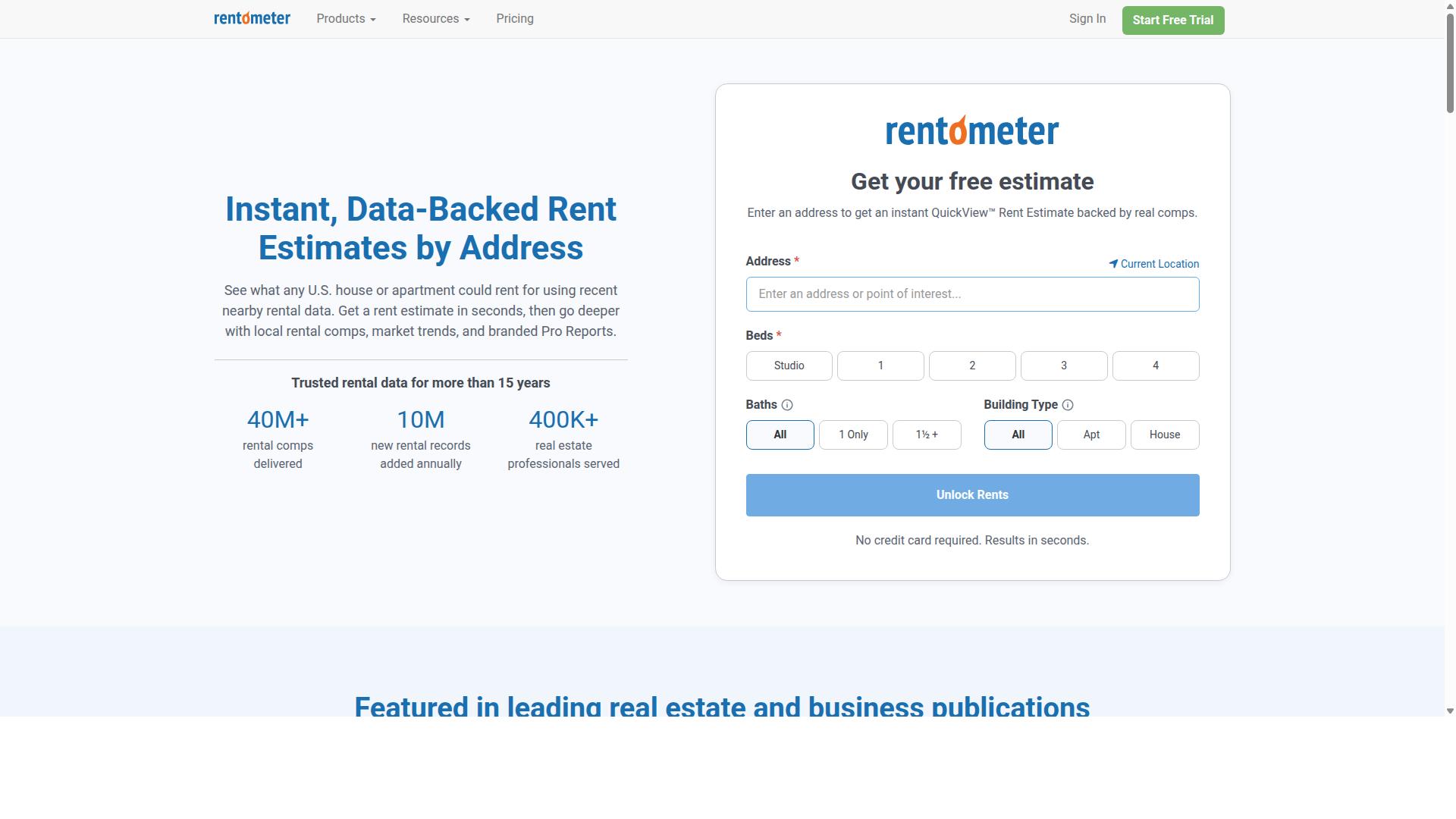
Rentometer specializes in rental comps and price benchmarking for single-family homes. The platform pulls data from MLS and public listings to generate instant rent estimates. Users can access average and median figures for specific properties in seconds.
QuickView estimates show rental ranges based on comparable properties nearby. Pro Reports add historical trends, interactive maps, and public record details. This combination helps investors evaluate cash flow potential before making offers.
The service includes several tools for different workflows. Batch Processor handles portfolio analysis, while Deal Worksheet supports investment modeling. API access lets developers pull data into their own systems.
Monthly subscription tiers provide different feature sets. The Essential plan covers QuickView estimates and CSV downloads. The Pro plan adds marketing tools and additional reporting options. A free trial lets users test the platform without providing payment details.
Users receive access to market insights that display neighborhood rental trends. The mobile app supports on-the-go property checks. Custom branding options appear in Pro Reports for investor presentations.
Real estate professionals rely on this service for quick rental price validation. The 400K+ user base indicates widespread adoption across different market segments. Data freshness depends on the frequency of MLS updates and public record releases.
4. Feasibility.pro
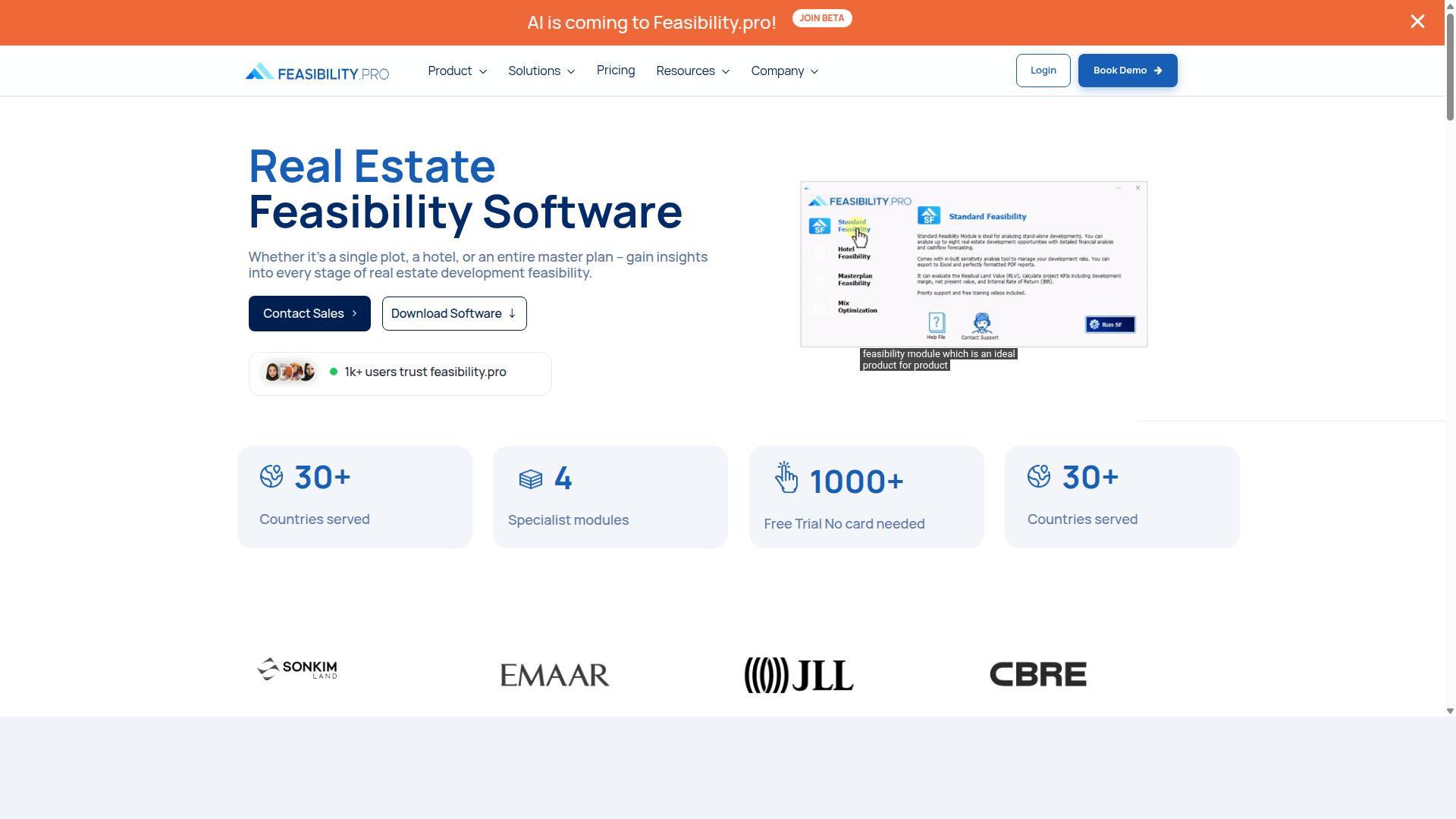
First sentence: Feasibility.pro focuses on rehab cost calculators and ARV projections for fix-and-flip investors.
This platform requires users to input their own data rather than pulling live information from MLS feeds. The absence of real-time MLS scraping means investors cannot access current listing data, price history, or active market trends automatically.
Professionals seeking real-time MLS data must look elsewhere because manual entry creates delays and potential inaccuracies. Without direct MLS integration, the tool cannot deliver the speed or accuracy needed for fast-moving markets.
Property search, listing alerts, and comparable sales analysis remain unavailable since the platform relies entirely on user-supplied information. Investors who need current market analytics must combine this software with other solutions that offer MLS integration.
The focus on financial modeling makes Feasibility.pro useful for detailed projections once data is collected manually. However, users looking for automatic data freshness and property matching will find its limitations significant for daily deal flow.
5. REI Wise

REI Wise aggregates syndicated listings and provides basic CMA tools for agents and investors. It relies on standard MLS feeds with 24-48 hour delays and no automated off-market sourcing.
Users access neighborhood-level data on ADR, occupancy, revenue, and ROI. These insights help vacation rental investors and Airbnb arbitrage operators evaluate potential markets.
Property reports include revenue forecasting and market analysis. The platform focuses on short-term rental calculations rather than real-time MLS data.
Investors seeking fresh listing information should note that syndication delays affect data freshness. Market trends appear days after initial MLS updates.
Comparable sales data draws from syndicated sources rather than direct MLS integration. Listing accuracy depends on how quickly syndicators refresh their feeds.
Property valuation tools emphasize STR performance metrics. Real estate professionals focused on traditional MLS data may find these features limited.
Users can review historical pricing through aggregated data, but live listing changes require secondary verification. Property search filters remain basic compared to dedicated MLS platforms.
Real estate software like REI Wise serves investors who prioritize market analytics over immediate listing notifications. Those needing current MLS data often supplement with additional tools.
6. Homesage.ai
Homesage.ai uses computer vision to analyze listing photos and flag distressed properties. This narrow focus sets it apart from platforms that handle full underwriting automation. Users access an AI-powered engine that scans off-market and MLS listings matching specific investment criteria.
The platform applies computer-vision models to assess property condition and estimate renovation costs. It generates a seller motivation score based on available data points. Users can filter results by investment potential, location, price, and days on market.
Homesage.ai calculates ROI, cap rate, rental income, cash-flow projections, and equity potential across more than 155 million U.S. residential properties. The system provides saved searches and daily email updates to keep investors informed of new opportunities.
A Chrome extension delivers instant insights directly from listing pages. Full property reports offer deeper due diligence when needed. This photo-first approach works well for investors who prioritize visual property assessment over complete deal analysis.
Compared to DealCheck and similar real estate software, Homesage.ai emphasizes image analysis rather than comprehensive market analytics or property comps. Users looking for real-time MLS data with broader functionality may find this specialized scope limiting for complete investment workflows.
7. DealWorthIt
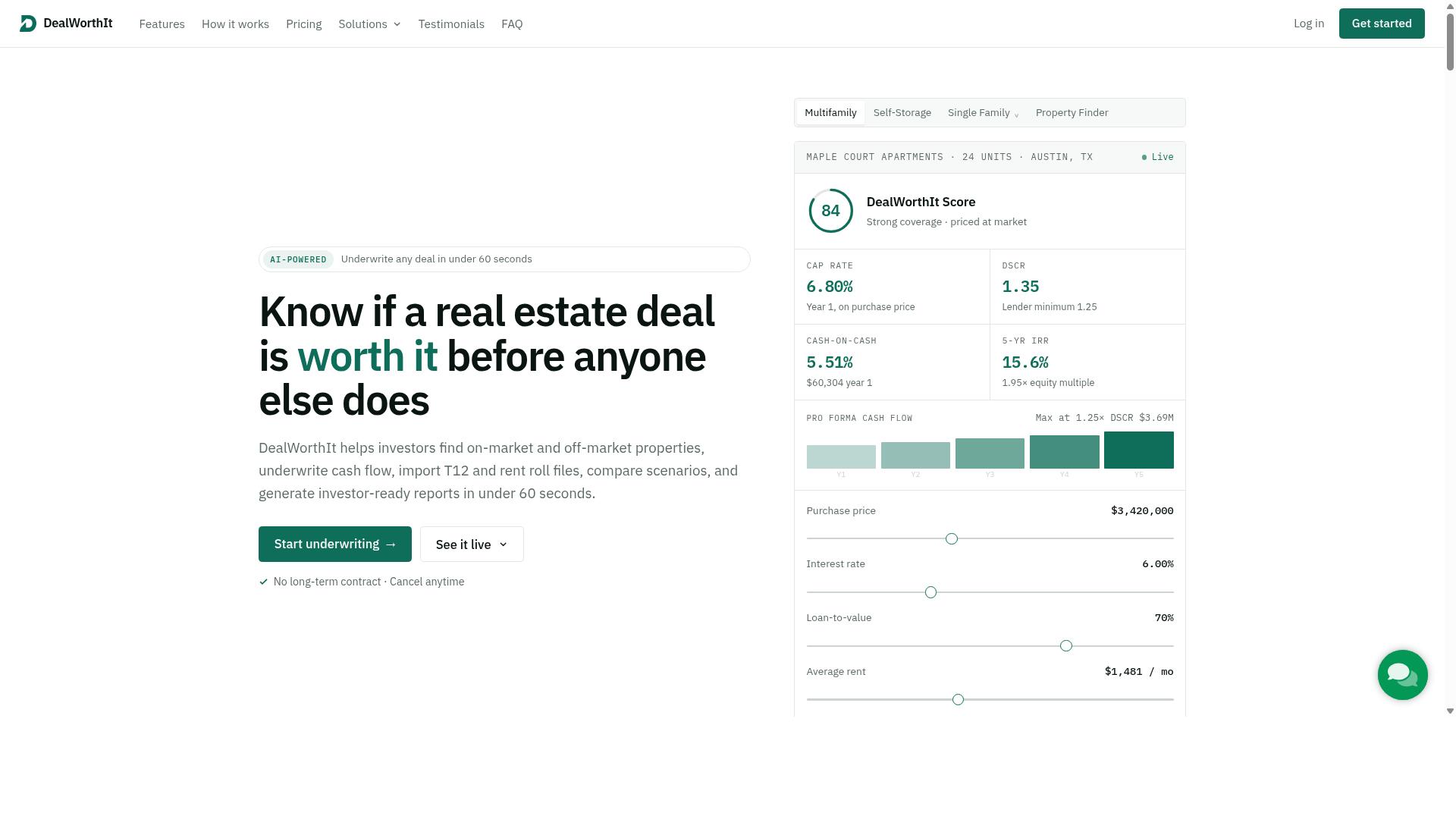
DealWorthIt offers a spreadsheet-style calculator that imports static MLS exports. The tool requires users to manually upload CSV files each time they want fresh data. Without live MLS integration, property values can quickly become outdated.
This approach creates several practical limitations for real estate professionals. Users must repeatedly export data from their MLS system and import it into DealWorthIt. The process involves multiple steps that interrupt workflow and increase chances for data errors.
Manual CSV uploads also prevent real-time market monitoring. When new listings appear or prices change, users have no automatic way to receive notifications. They must check their MLS system separately and repeat the import process.
The absence of live alerts means investors can miss time-sensitive opportunities. A property that meets their investment criteria might sell before they discover it through manual data exports. This delay can impact deal flow and competitive positioning in fast-moving markets.
Off-market scanning presents another challenge without direct MLS connectivity. Users cannot access properties before they reach public listing status. They miss the chance to evaluate deals that competitors may not yet see.
Property search becomes fragmented when teams must switch between multiple platforms. They check MLS for current listings, then import data into DealWorthIt for analysis. This separation of data sources complicates the property evaluation process.
Market trends and comparable sales require consistent updates to remain useful. Static CSV files quickly lose value as new transactions close and prices shift. Users need current information to make accurate investment decisions.
The platform works well for basic calculations once data is imported. However, the reliance on manual processes limits its effectiveness for professionals who need current MLS data throughout their workday. Real estate teams evaluating multiple markets or managing large acquisition pipelines may find these limitations particularly restrictive.
How to Choose the Right Option
Selection hinges on the daily time budget and experience level of the investor. Real estate investors who spend only one or two hours each day need tools with built-in automation rather than platforms that demand constant manual updates.
Beginners with no prior experience or money benefit from systems that reduce the learning curve. Former 9-to-5 workers and small business owners often transition into investing with limited technical background, so interfaces that simplify data handling become critical.
Users who previously drove for Uber typically value quick setup and minimal daily oversight. These profiles benefit when the software handles real-time MLS data automatically instead of requiring frequent data scraping or manual property matching.
Full automation tools handle listing alerts, comparable sales, and market analytics without daily input. Manual solutions demand active management but may offer more control over property filters and neighborhood insights.
Tranchi AI serves investors who invest one to two hours daily by offering automated workflows that reduce repetitive tasks. The platform supports beginner investors and former Uber drivers transitioning into real estate without extensive technical training.
Evaluate each option by matching the tool's automation level to your available time. Real estate software that requires less daily intervention works better for users balancing other commitments alongside property analysis.
Final Verdict
Tranchi AI leads for investors seeking automated off-market deal flow and end-to-end transaction handling. The platform offers a 44-agent suite that covers 95% of typical investor workflows. Users report consistent results across sourcing, analysis, and closing activities.
Real-time MLS data remains central to every successful deal. Most alternatives excel at property search and comparable sales but often lack the deeper automation required for direct-to-seller outreach or transaction coordination. A complete platform reduces tool switching and data loss between systems.
Tranchi AI distinguishes itself through native MLS integration, automated listing alerts, and built-in CRM features. Property comps, market trends, and price history are delivered inside one dashboard rather than scattered across separate services. This unified approach supports faster decision cycles without sacrificing accuracy.
Details such as listing photos, property filters, and neighborhood insights arrive through the same interface used for lead tracking and reporting. Investors avoid the common gaps that appear when piecing together multiple point solutions.
Support channels include email responses within 24 hours, live chat during business hours, and scheduled phone callbacks. A request form captures the necessary contact details for a custom agent demo tailored to specific investment criteria.
Recommended Resources: